IMO/ILO work on seafarer issues
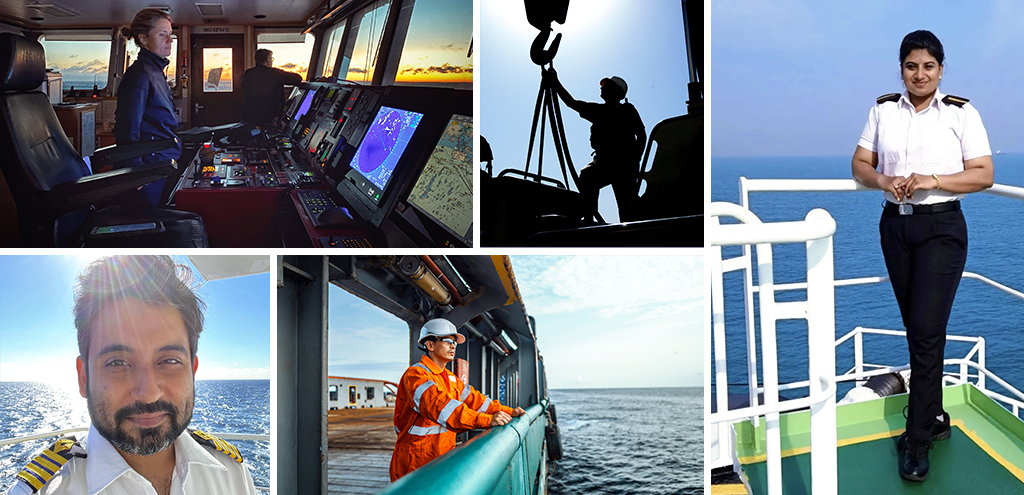
The rights of seafarers have been a top priority for IMO and the International Labour Organization (ILO) for many decades.
IMO and ILO established the Joint ILO/IMO Tripartite Working Group (JTWG) to Identify and Address Seafarers' Issues and the Human Element in 2022, bringing together governments, shipowners and seafarers to develop practical solutions, guidance and regulatory improvements.
Fair treatment of
seafarers detained in connection
with alleged crimes
The Guidelines on fair treatment of seafarers detained in connection with alleged crimes were developed by the JTWG in November 2024 and adopted by the IMO Legal Committee (LEG 112) in 2025.
The Guidelines aim to protect seafarers’ rights and ensure they are treated with fairness and dignity across all jurisdictions. The Guidelines cover issues related to:
safeguarding due process rights;
protection from arbitrary detention, coercion or intimidation;
ensuring that wages, medical care and repatriation rights should remain intact during any legal proceedings;
improving coordination among countries, including port States, flag States, coastal States, States of which the seafarer is a national, shipowners and seafarers.
Download the Guidelines on fair treatment of
seafarers detained in connection
with alleged crimes here.
Violence and harassment in the maritime sector, including sexual assault and sexual harassment
Amendments to table A-VI/1-4 of the Seafarers' Training, Certification and Watchkeeping Code (STCW Code) introduce mandatory training for all seafarers on preventing and responding to violence and harassment at sea - including sexual harassment, bullying and sexual assault.
The amendments were developed following discussions at IMO in 2022, approved by MSC 107 in 2023, reviewed by the JTWG in February 2024, and adopted at MSC 108 in May 2024.
They form part of mandatory basic training under personal safety and social responsibilities.
The amendments entered into force on 1 January 2026.
Safe Horizons project
IMO is continuing work with industry partners through the Safe Horizons project, developed with the European Commission, which will address violence and harassment in the maritime sector by building on existing IMO frameworks, including the STCW amendments and the ILO Violence and Harassment Convention, 2019.
Seafarer abandonment: guidance for States
The first JTWG meeting in December 2022 adopted the Guidelines for port State and flag State authorities on how to deal with seafarer abandonment cases. These were adopted by the IMO Legal Committee (LEG 110) under resolution LEG.6(110), in 2023.
The Guidelines respond to rising cases of crew abandonment reported to ILO and aim to:
Strengthen coordination among flag States, port States, States in which seafarers are national or resident and States in which recruitment and placement services operate;
Ensure payment of outstanding wages;
Secure repatriation;
Provide essential needs, including medical care.
They draw on international labour standards, notably the ILO Maritime Labour Convention, 2006 (MLC, 2006), as amended, including an earlier joint ILO-IMO resolution adopted in 2001 (resolution A.930(22)), relevant IMO frameworks, and relevant developments in regional and national law and practice.
They also call for national Standard Operating Procedures (SOPs), developed with seafarers' and shipowners' organizations, to clarify responsibilities and liabilities when shipowners fail to meet obligations for repatriation, wages and essential support.
Download the Guidelines for port State and flag State authorities on how to deal with seafarer abandonment cases here.
Read more about seafarer abandonment here.
Guidelines developed by ILO/IMO
Guidelines on fair treatment of seafarers detained in connection with alleged crimes here (Adopted in 2025)
Guidelines for port State and flag State authorities on how to deal with seafarer abandonment cases (Adopted in 2022/2023)
Promotion as widely as possible of the application of the 2006 guidelines on fair treatment of seafarers in the event of a maritime accident (Resolution A.1056(27), 2011)
Guidelines on fair treatment of seafarers in the event of a maritime accident (Adopted in 2006)
Guidelines on Shipowners' Responsibilities in Respect of Contractual Claims for Personal Injury to or Death of Seafarers (Adopted in 2001). (See also the 2014 amendments to the ILO MLC Convention)
Guidelines on Provision of Financial Security in Case of Abandonment of Seafarers (Adopted in 2001).