FAQ - Plastic pellets
This page provides information about the transport of plastic pellets by sea.
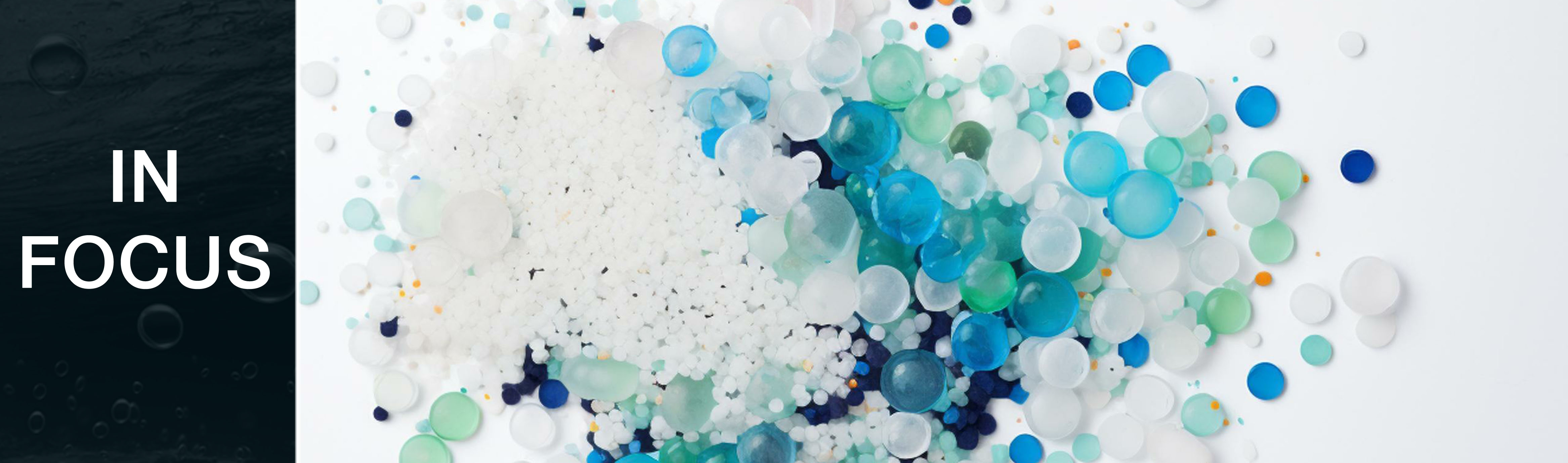
Plastic pellets (also known as nurdles) are small plastic granules that are widely used as a raw material in the creation of plastic products.
When plastic pellets are released into the marine environment, they can cause environmental damage, including impacts on fishing, aquaculture and tourism.
To address this issue from the perspective of maritime transport, IMO is working on provisions on how freight containers used to transport plastic pellets should be declared to ship operators and stowed on ships, and on how plastic pellets should be packaged for maritime transport. Work on developing guidance for responding to marine incidents involving plastic pellets is also underway.
This work is linked to IMO's work to address marine plastic litter from ships.
What are plastic pellets/nurdles?
Pellets are defined as a set of "small pre-formed masses of moulding material, having relatively uniform dimensions in a given batch, used as raw material in moulding and extrusion operations" by the ISO (International Organization for Standardization) in ISO 472:2013.
The term "plastic pellets" refers to small granules (also known as nurdles, pre-production plastics) used as the base material to create other plastic products.
Currently, IMO Members States are considering the most appropriate definition for use in IMO instruments, in order to provide clarity as to which products fall within the scope of any IMO provisions.
Why are plastic pellets an issue?
If plastic pellets are released and dispersed into the marine environment, they can harm living resources and marine life and can interfere with other legitimate uses of the sea, such as fishing and aquaculture. Additionally, the pellets can be washed up on beaches and coastlines and, as a result, negatively impact tourism and shore-based activities.
What has IMO done to regulate the transport of plastic pellets?
IMO began addressing the issue of the transport of plastic pellets following the X-Press Pearl incident off the coast of Sri Lanka in February 2021. Following a fire onboard and subsequent sinking of the ship, pellets were released into the marine environment and several tonnes of pellets washed ashore.
In April 2026, MEPC 84 agreed to develop a mandatory code governing the maritime transport of plastic pellets in freight containers, under MARPOL Annex III and/or the SOLAS Convention, following the Sub-Committee on Pollution Prevention and Response (PPR 13) recommendation. PPR 14 was tasked with drafting the code and reporting back to MEPC.
In March 2024, the Marine Environment Protection Committee (MEPC 81) approved MEPC.1/Circ.909 Recommendations for the carriage of plastic pellets by sea in freight containers.
The recommendations include the following actions:
Plastic pellets should be packed in good quality packaging which should be strong enough to withstand the shocks and loadings normally encountered during transport. Packaging should be constructed and closed to prevent any loss of contents which may be caused under normal conditions of transport, by vibration or acceleration forces.
Transport information should clearly identify those freight containers containing plastic pellets. The shipper should supplement the cargo information with a special stowage request for proper stowage.
Freight containers containing plastic pellets should be properly stowed and secured to minimize the hazards to the marine environment without impairing the safety of the ship and persons on board. Specifically, they should be stowed under deck wherever reasonably practicable, or inboard in sheltered areas of exposed decks.
The Recommendations for the carriage of plastic pellets by sea in freight containers (MEPC.1/Circ.909) should be used as the basis for the content of the code, taking into consideration the experience by Member States and international organizations on its implementation.
How should plastic pellets be cleaned-up after a spill?
IMO Members States, meeting at MEPC 82, approved the Guidelines on good practice relating to clean-up of plastic pellets from ship-source releases. These guidelines provides practical guidance for government authorities on issues such as contingency planning, response, post-spill monitoring and analysis, and intervention and cost recovery.
Who is liable for clean-up costs if pellets are washed ashore?
The liability for the clean-up costs in the event of a release of plastic pellets into the marine environment and/or are washed ashore depends on the incident and on any relevant treaty to which the coastal State and/or flag State is party, in addition to any applicable national law.
There are several IMO treaties relevant to this, including:
- The Nairobi International Convention on the Removal of Wrecks (WRC), 2007
The Convention defines "Wreck", following upon a maritime casualty, as:
(a) a sunken or stranded ship; or
(b) any part of a sunken or stranded ship, including any object that is or has been on board such a ship; or
(c) any object that is lost at sea from a ship and that is stranded, sunken or adrift at sea; or
(d) a ship that is about, or may reasonably be expected, to sink or to strand, where effective measures to assist the ship or any property in danger are not already being taken.
The articles of the WRC cover liability of the owner for the costs of locating, marking and removing hazardous ships and wrecks - the registered shipowner is required to maintain compulsory insurance or other financial security to cover liability under the convention (not exceeding an amount calculated in accordance with article 6(1)(b) of the Convention on Limitation of Liability for Maritime Claims, 1976, as amended – refer hereunder).
- Convention on Limitation of Liability for Maritime Claims (LLMC, 1976), and LLMC Protocol 1996 as amended by resolution LEG.5(99)
Limits of liability are specified for many types of claims – such as claims for loss of life or personal injury, property claims (such as damage to other ships, property or harbour works), claims in respect of the raising, removal, destruction or the rendering harmless of a ship which is sunk, wrecked, stranded or abandoned, including anything that is or has been on board such ship, and claims in respect of the removal, destruction or the rendering harmless of the cargo of the ship.
Ship insurance
Generally speaking, ships must carry insurance under the Nairobi International Convention on the Removal of Wrecks (WRC), 2007, usually through a P&I Club.
The International Group of Protection and Indemnity Associations (P & I Clubs) has consultative status with IMO.
What is IMO doing to tackle container losses?
IMO has long been working to ensure the safe transport of containers, including through guidelines on container stowage; mandatory SOLAS requirements to provide the verified gross mass of a container before it can be loaded on a ship; and mandatory reporting of loss of any containers, i.e. not only containers used to transport dangerous goods (amendments to SOLAS and MARPOL Conventions to be adopted in 2024).
The work will continue through a new output on the "Development of measures to prevent the loss of containers at seaʺ, which was approved by MSC 107 and is being coordinated by the CCC Sub-Committee. It is anticipated that all matters relating to loss of containers will be discussed under that output in a holistic manner, with a view to developing further relevant provisions.
Please find more information about safe transport of containers here.
Container loss statistics
The World Shipping Council (WSC) estimates that in 2024, approximately 576 containers were lost at sea, out of around 250 million containers transported. More information here.
What is IMO doing to tackle plastic pollution from sea-based sources?
IMO's long history of responding to pollution of the marine environment from ships spans more than five decades, through the development of guidance and regulations.
The International Convention for the Prevention of Pollution from Ships (MARPOL) is the main international convention covering prevention of pollution of the marine environment by ships from operational or accidental causes. The Convention includes several annexes which cover regulations for the prevention of pollution by oil; noxious liquid substances in bulk; harmful substances carried by sea in packaged form; sewage from ships; garbage from ships (including marine litter); and air pollution from ships.
IMO's work on marine plastic litter
The regulations in MARPOL Annex V and the London Convention/Protocol prohibit the discharge and dumping of plastics from ships, respectively.
MEPC 84 adopted the 2026 Strategy and the Action Plan to Address Marine Plastic Litter from Ships, reaffirming IMO's goal of zero plastic waste discharges to sea from ships by 2030. It updates and supersedes the 2021 Strategy to address marine plastic litter from ships (resolution MEPC.341(77)) and 2025 Action Plan for addressing marine litter, adopted by IMO’s Marine Environment Protection Committee (MEPC 83).
The 2025 Action Plan, updating an earlier 2018 Action Plan to Address Marine Plastic Litter from Ships, was combined with the Strategy to address marine plastic litter from ships, adopted by MEPC 77 in 2021.
The Strategy sets out the ambitions to reduce marine plastic litter generated from, and retrieved by, fishing vessels, reduce shipping's contribution to marine plastic litter and improve the effectiveness of port reception facilities and waste processing in reducing marine plastic litter.
Please find more information on marine plastic litter here.