Autonomous shipping - FAQs
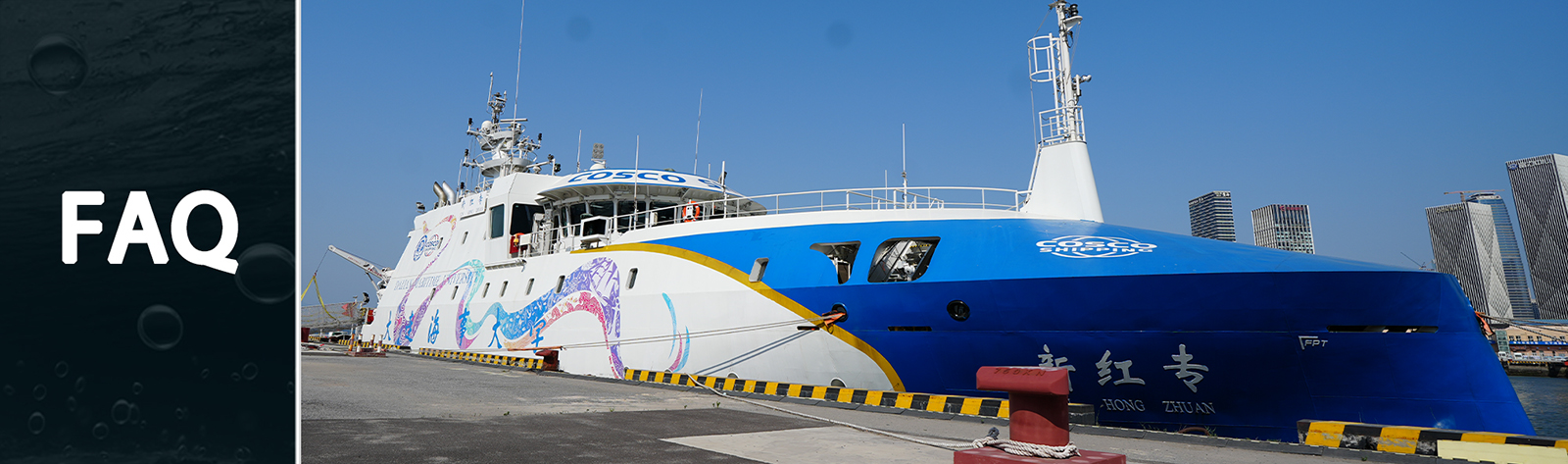
IMO adopted a new International Code of Safety for Maritime Autonomous Surface Ships (MASS Code) in May 2026, marking a major regulatory milestone for autonomous shipping. The Code came into effect on 1 July 2026.
- To download the International Code of Safety for Maritime Autonomous Surface Ships (MASS Code) , click here.
What is an autonomous ship?
A Maritime Autonomous Surface Ship (MASS) is a ship which, to a varying degree, can operate independently of human interaction.
A ship is considered a MASS only when autonomous or remote technologies replace or support functions normally carried out by crew on board. To qualify, the ship must have successfully completed the approval process and hold a valid MASS Safety Certificate. Enhanced automation on its own does not make a ship a MASS, and such ships do not enjoy any privileges over conventional vessels.
Shipowners, operators and designers are encouraged to adopt a functional approach, assessing which ship functions are carried out remotely, performed by autonomous systems, or undertaken conventionally by crew on board. This should be done in full compliance with SOLAS and all other applicable regulations.
While the number of fully crewless or remote-operated ships is currently limited, a growing number are being successfully trialled internationally.
Why do we need specific rules for autonomous ships?
IMO has a responsibility to respond appropriately to innovation and rapid technological developments, ensuring that new technologies are integrated safely and consistently into the international regulatory framework.
The autonomous systems and functions introduced on a MASS present different operational risks and therefore will require in many cases an alternative approach.
Depending on the extent of its autonomy or remote operation, a MASS may not be able to comply with all requirements applicable to conventional ships. Many of these requirements stem from SOLAS and other applicable instruments, which assume the physical presence of crew on board, including for tasks requiring manual operation by crew members.
The roles and responsibilities of the master, remote operators, and onboard crew also need to be regulated according to the level of autonomy of a ship.
What is the MASS Code?
The non‑mandatory MASS Code was adopted by resolution MSC.595(111) in May 2026 by the Maritime Safety Committee (MSC) and came into effect on 1 July 2026.
It supports the safe integration of remotely controlled or autonomous commercial ships into global shipping. It establishes a comprehensive, goal‑based framework to ensure that maritime autonomous surface ships are designed, constructed, operated and certified to safety and environmental standards equivalent to conventional ships.
The adopted MASS Code requires a description of the different modes of operation for which the MASS is designed.
The Code applies to cargo ships covered under SOLAS Chapter I (generally, ships over 500 GT on international voyages). However, it is recommended that Member States apply the Code, as far as practicable, to MASS of less than 500 gross tonnage as well.
As a non-mandatory instrument, Member States are encouraged to apply the Code and share their experience through the MASS Experience-Building Phase (MASS EBP). This process is intended to gather practical insights from both Member States and industry, helping to inform and support the development of a future mandatory MASS Code under the International Convention for the Safety of Life at Sea (SOLAS).
IMO’s regulatory work is designed to ensure that new technologies are properly considered so that the regulatory regime is kept up to date to ensure that the highest levels of safety are maintained. This is so that new and conventional technologies can co-exist.
What are the key principles of the MASS Code?
The MASS Code provides voluntary guidance for the safe design, operation and certification of Maritime Autonomous Surface Ships (MASS). It complements existing maritime regulations, focuses on safety goals while maintaining technology-neutrality and is designed to facilitate a future transition into a mandatory instrument.
The MASS Code introduces new concepts based on the principles of risk assessment. Operators must identify potential risks and demonstrate how they will manage them throughout a vessel's operation.
The Code introduces new concepts to help ensure autonomous and remotely operated ships can operate safely. These include defining how a vessel will operate, the conditions in which it can operate safely (including any limitations, wind speed, sea state, visibility, water depth, adverse weather and daytime vs. nighttime operations), and the actions it will take if conditions move outside those limits.
Importantly, the MASS Code underscores the importance of human oversight, with the master retaining overall responsibility for the ship at all times – even if not on board the ship. This includes the use of Remote Operations Centres (ROCs), where trained personnel can monitor or control vessel functions from ashore. ROCs should be assessed, certified and operated under a robust Safety Management System (SMS).
This framework aims to support the safe and responsible use of autonomous and remotely operated vessels while encouraging innovation in maritime transport.
How was the MASS Code developed?
The adoption of the non-mandatory MASS Code in 2026 is the culmination of nearly a decade of multilateral discussions, legal work and on-the-water trials, to enable new and conventional technologies to operate safely together. Its adoption assesses how existing regulations apply to ships with varying degrees of autonomy.
Before its adoption, trials of maritime autonomous surface ships were conducted under interim guidelines approved by the Maritime Safety Committee (MSC 110) in June 2019 (MSC.1-Circ.1604).
In 2021, IMO completed a Regulatory Scoping Exercise (RSE) to assess the degree to which the existing IMO regulatory framework might be affected in order to address MASS operations (MSC.1/Circ.1638, FAL.5/Circ.49 and LEG.1/Circ.11). The RSE identified several gaps and was the basis for the development of the MASS Code.
The Maritime Safety Committee (MSC), the Facilitation Committee (FAL) and the Legal Committee (LEG) established a Joint MSC-LEG-FAL Working Group on MASS to address common issues across instruments under their respective purviews. The Joint Working Group has held three meetings to date, the outcomes of which have been taken into account in the development of the MASS Code.
In line with IMO practice for the development of new instruments, the MASS Code has been structured following a goal-based approach, with goals, functional requirements and associated expected performances set out in part III.
- To read the latest report of the Joint Working Group (Third session) click here.
What are the next steps for the MASS Code?
At its 111th session, the Maritime Safety Committee (MSC 111) endorsed the Revised road map for developing a goal-based code for MASS, with the following milestones:
- December 2026 (MSC 112) – Development of a framework for an Experience-Building Phase (EBP) of the non-mandatory MASS Code;
- 2028 – Development of the mandatory MASS Code, based on the non-mandatory Code and result of the EBP and input from relevant sub-committees. Consideration of amendments to SOLAS (new chapter) for the Code's adoption;
- By 1 July 2030 – Expected adoption of the IMO’s first mandatory MASS Code, for entry into force on 1 Jan 2032.
What work on MASS is continuing in the FAL, MEPC and LEG Committees?
The Facilitation Committee (FAL) agreed on a road map to address MASS, focusing on the ship-port interface. The FAL Committee will assess the adopted non-mandatory MASS Code and consider the need for amendments and interpretation of the annex to the FAL Convention.
The Legal Committee (LEG) agreed on a road map to consider the need for amendments or interpretations of treaties under the purview of LEG Committee arising from the Mass Code and its application.
The Marine Environment Protection Committee (MEPC) agreed to consider the need for amendments to instruments under its purview. It tasked the Sub-Committee on Pollution Prevention and Response (PPR) with conducting a regulatory scoping exercise and gap analysis of MEPC mandatory instruments, including an assessment of the non-mandatory MASS Code and progress by MSC, LEG and FAL. Based on this work, PPR will consider the need for amendments or interpretations and develop a roadmap.
Will autonomous ships take over conventional ones?
At present, there are no commercially operating, internationally trading SOLAS cargo ships that operate autonomously or remotely-controlled. However, successful trials have demonstrated that the operation of larger remotely controlled and autonomous ships is feasible, and such ships may enter commercial service in the near future.
MASS and conventional ships can be expected to operate side by side in the future. However, for a full roll-out of MASS globally, a number of regulatory, technical and operational hurdles need to be overcome.
It can be further expected that MASS will gradually evolve with only some of the ship functions being remotely-controlled or autonomous at the beginning, with crew on board, towards more advanced MASS.
Read more
Seminars on MASS (Links include presentation downloads):
- IMO Seminar on implications, challenges and opportunities of Maritime Autonomous Surface Ships (MASS) for ports and public authorities (April 2024)
- IMO/Republic of Korea Symposium on ʺMaking headway on the IMO MASS Code” (May 2023)
- IMO Seminar on legal issues including UNCLOS and MASS (April 2023)
- IMO Seminar on Development of a Regulatory Framework for MASS (September 2022)